The biggest mistake most women make when they embark on a weight loss journey is being too restrictive in their diets.
The most important thing you have to accept is that it takes time to get to your goal. You didn’t get to a point where you are unhappy with yourself overnight and you won’t get back from that point overnight either.
Stop chasing big numbers on the scales and stop feeling like a failure if you don’t achieve fast weight loss. The faster it comes off, the less likely it is to be body-fat. Slow and steady wins the race every time.
Here are some pointers to help you:
* Calculate the numbers for slow, safe, effective fat loss. (I’ll show you how to do that below) And stick to them as religiously as possible for at least three weeks. If your goal is 1700 calories, “sticking to it” does not mean logging 1800 one day and 700 the next. If you’re not consistent, how do you know what to change?
* There’s no point restricting yourself to 1200 calories or less through the week, if you get to the weekend and cheat your arse off, running up 6000 calories on Saturday and again on Sunday. Having said that, it’s your average over seven days that really matters, so if you do go mad at the weekend, just cut your calories back over the next day or so and you’ll be back on track.
* If your diet is so restrictive, it’s making you cheat then you need to rethink it. Aim for 80/20. That’s 80 per cent good stuff. Plenty of good sources of protein, lots of green veg to keep you healthy, good fats like olive oil, coconut oil, avocado, oily fish, nuts and whole food carbs. Stay away from bread, pasta, breakfast cereals, biscuits, crackers and instead opt for potatoes, sweet potatoes, rice, porridge, quinoa, root veg like carrots, parsnips and squash.

THE FUTURE’S ORANGE: Sweet potato is a great source of carb
How to work out your calories.
Get your calculators out and follow the steps below to find out how many calories you should be aiming for every day to lose body fat at a sensible and sustainable rate and change your shape.
Step One
Firstly, take your bodyweight in kilogrammes and multiply it by 22 to find your basal metabolic rate.
This is the amount of calories you need every day TO SURVIVE. You have a heart, brain, kidneys, a liver, skin an immune system and a reproductive system. All of these require calories to function. This is non-negotiable.
If you don’t know your bodyweight in KG weigh yourself in stones and google the conversion. I’m around 67kg at the moment. So let’s use me.
67 x 22 = 1474 calories. This is my BMR.
This is the minimum amount I need to eat every day to survive and function as a healthy human being. If I were in a coma, I’d need to be given this to stay alive.
Step two
Then we need to add our energy expenditure on top to take into account our daily movement, eating, and training. This s referred to as our Total Daily Energy Expenditure or TDEE.
If you’re injured or low activity, multiple your BMR by 1.15.
If you’re more active, maybe train 2-3 times a week, multiply it by 1.3, if you train 4 or more times a week, 1.5 and if you train multiple times a week, plus have a very active job, anywhere from 1.6-1.9.
For me, let’s say 1.5
1474 x 1.5 = 2, 211. This is the amount of calories I need to maintain my current weight.
Step three
So I’ve worked out roughtly how much I need to eaat to stay the same. If I want to lose body fat, I need to go into a sensible calorie deficit (eat less than I need) , so that all my vital functions can still be carried out but my body has to go to my fat stores to find the extra calores. If I’m too aggressive with that deficit, I won’t be able to sustain it and it might even trigger a massive binge. My energy levels will be low and I’ll probably be constantly fighting cravings. This is because your metabolism – the way your body converts your food into calories, among other things – is like a thermostat. It reacts to the amount you eat and move. If you don’t eat enough, it will slow you down like driving slowly when you know you don’t have much fuel in your car. A sensible calorie deficit is between 10-15 per cent. You also need to be eating enough calories so that your body doesn’t start to break down your muscle to feed you. We want to lose bodyfat, remember not muscle.
So back to finding my deficit. We take that 2, 211 and we multiply it by 15 per cent.
On a calculator this is 2211 x 0.15. = 331.65
We then take away 331.65 from 2211 and this give us the amount of calories we need to be eating, taking into account all those variables, to lose bodyfat slowly, safely and keep it off!
2211-331 = 1880.
This is the amount of calories I need to eat for fat loss and health.
Step four
As we’ve seen, the first thing you need to be concerned about if you’re trying to lose fat is being in a calorie deficit. Remember, being in a calorie deficit means eating less calories than you need so your body will be forced to go to your fat stores to fill the shortfall.
The second thing is eating your protein.
Protein is not just the key to sticking to any healthy regime, it’s the key to life! It keeps your blood healthy, ensures your muscles contract, boosts your immune system, helps you retain muscle tissue, keeps your hair healthy.
All of you in here want to be “toned”. To be “toned” you have to lose fat and hold onto muscle tissue. If you don’t eat enough protein and enough calories, you won’t do that. Your body will break it down and use it as fuel.

TURN PRO: Protein is the key to a healthy lifestyle
If you want to know how much protein you should eat, again take your bodyweight in kilogramme and multiply it by 1.5 to 2.5 depending on how much you train.
Again, using me as the example at 67kg, that equates to anywhere between 100g and 167g of protein a day.
Getting your protein intake up is a total game-changer as far as feeling fuller longer, resisting the urge to snack on high calorie refined carbs and keeping muscle. Muscle is metabolically-expensive tissue. This means the body burns calories to run it. The more of it you have, the more your metabolism or calorie burn will increase.
Step seven
So now I know I need to start with 1880 calories to be in a deficit for the amount of activity I do.
I now I need to eat at least 100g of protein a day.
How do I know if I’m doing that.
There are two ways. I can look at the nuritional information on everything I buy and try and calculate the calories myself.
Or I can download a free app called www.myfitnesspal.com which will do all of that for me.
Bit of a no brainer, I’d say.
Yes, I know it can be a pain to login and sometimes it doesn’t get it right, but once you get your head around it, it is the easiest way to learn about food and calories. It’s a great tool to help you keep track of what you are eating, whether you are eaing too much or not enough, how much protein you’re eating etc. It will educate you and once you have this education you can get use it to get in shape and stay that way for the foreseeable future.
If you want to manage something, you have to measure it.
Final word
Calories are king when it comes to weight loss. If you are eating too many for the amount you move, you will gain weight. This is called energy balance.
It doesn’t matter where those foods come from, whether it’s fat, protein or carbs, if you eat too much of anything you will gain weight.
If you are not seeing results, you are taking in hidden mindless-eating calories from somewhere.
If you think that you’re not losing weight because you’re not eating enough, you need to start tracking.
Generally what happens is that you may not be eating enough at times, but you will be making up for it somewhere along the way.
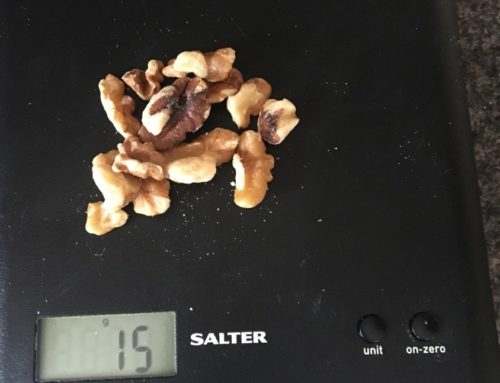
Even if you only eat “clean foods” you can still gain weight, especially if you are snacking on things like nuts which contain a lot of calories.
If you really want to see results and keep them longterm you need to:
1. Be patient
2. Work out a starting point for your calories and protein (macros)
3. Be consistent with eating those calories and protein, day in and day out for at least three weeks
4. Log everything, especially booze intake which can massively spke your calorie intake, not just from the drink but also from the less-than-idea food choices that often accompany it.
5. If you’re not seeing any change at all after three – four weeks of consistent logging, maybe tweak your macros and start again until you find that sweet spot.
6. Stop being so restrictive. This is a lifestyle you’re creating so telling yourself you’re never going to eat sugar again or have fish and chips is unrealistic. Track your food so you can leave a little room for some of the things you fancy without going into a calorie surplus.